
For decades, passwords have been our digital gatekeepers. From logging into email accounts to securing online banking, they’ve been the default method of authentication. But as cyber threats evolve and user frustration with complex login systems grows, a new question is emerging:
Are traditional passwords finally on their way out?
Thanks to emerging technologies like biometrics and passkeys, the answer may be “yes.”
In this blog post, we’ll explore the problems with passwords, how biometrics and passkeys offer smarter alternatives, and what the future of secure login looks like.
Why Passwords Are Failing Us
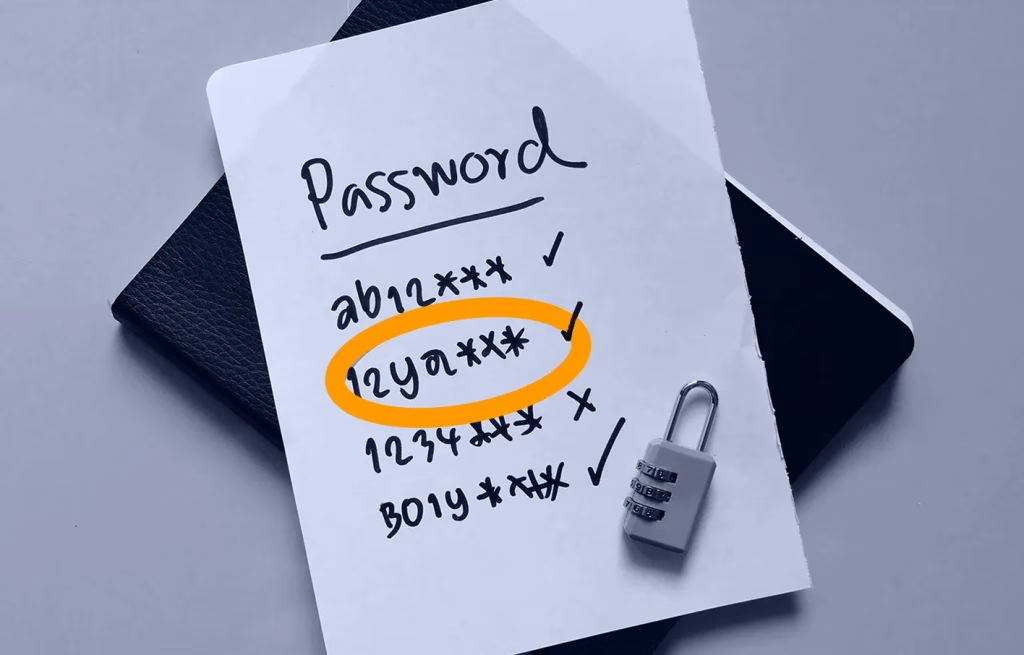
Passwords were once simple. Then came the breaches, hacks, and phishing attacks. To make matters worse, most users:
- Use weak passwords (e.g., 123456 or password)
- Reuse the same password across multiple accounts
- Forget them and rely on unsafe methods like sticky notes or unsecured spreadsheets
- According to Verizon’s 2023 Data Breach Report, over 80% of breaches involve weak or stolen credentials. Clearly, it’s time for a change.
Biometrics: Security That’s Built Into You
Biometric authentication uses your unique physical features like a fingerprint, face, or iris to verify your identity. It’s already built into most modern smartphones and laptops.
Pros of Biometrics:
- Fast and convenient: Just look or touch no typing required.
- Harder to steal: You can’t forget or misplace your fingerprint.
- Integrated with devices: Common on iOS, Android, Windows, and macOS.
Cons of Biometrics:
- Privacy concerns: Once stolen, biometric data can’t be reset.
- Hardware limitations: Not every device supports it.
- Accuracy issues: Scanning may fail due to lighting, injury, or obstruction.
- Biometrics are ideal for unlocking devices or granting access to stored credentials, but on their own, they aren’t the full solution.
What Are Passkeys and Why Are They Revolutionary?
Passkeys are the next generation of passwordless authentication. They use a form of public-key cryptography where:
- A public key is stored on the server.
- A private key remains securely on your device.
- You authenticate using biometrics or a PIN to unlock your passkey.
- Platforms like Apple, Google, and Microsoft are already integrating passkeys into their ecosystems via Face ID, Touch ID, or Windows Hello.
Benefits of Passkeys:
- No password to remember: Eliminates password fatigue.
- Phishing-proof: Passkeys only work with the intended app or website.
- Cross-device syncing: Stored securely in cloud accounts.
Limitations of Passkeys:
- Platform lock-in: Best experience if you stay within one ecosystem.
- Adoption lag: Not all websites and services support passkeys yet.
- Access recovery: If you lose your device without sync backup, recovery can be tricky.
- Passkeys are already supported by major browsers and many top websites like Google, eBay, and PayPal.
Biometrics + Passkeys: A Powerful Combo
Here’s where the magic happens: biometrics and passkeys work best together.






Leave a Reply