
Technology

Understanding Descriptive Statistics in Data Analysis
Descriptive statistics are a fundamental part of data analysis used to summarize and describe the main features of a dataset. They provide simple summaries of the sample and the observations made. Here are some key concepts in descriptive statistics: Measures of Central Tendency Mean: The average value of a dataset, is calculated by summing all…

Cloud Computing for Startups/Small Businesses
Cloud computing offers numerous benefits for startups and small businesses, providing cost-effective, scalable, and flexible solutions to help them thrive. Here’s a breakdown of how cloud computing can benefit startups and small businesses: Cost Efficiency Cloud computing eliminates the need for investing in expensive hardware and infrastructure. Instead, businesses pay for the services they use…

Internet of Things (IoT)
The Internet of Things (IoT) refers to the network of interconnected devices embedded with sensors, software, and other technologies to exchange data and communicate with each other via the internet. It encompasses a vast array of devices, from everyday objects like smartphones, wearable devices, and home appliances to more specialized machinery used in industries, creating…

Microservices Architecture
Microservices architecture is an approach to developing software applications as a collection of small, independent, and loosely coupled services. Each service focuses on specific business capabilities and communicates with others through APIs. This architecture offers several benefits, along with certain challenges and implementation considerations. Benefits of Microservices Architecture Scalability: Microservices allow for scaling individual services…
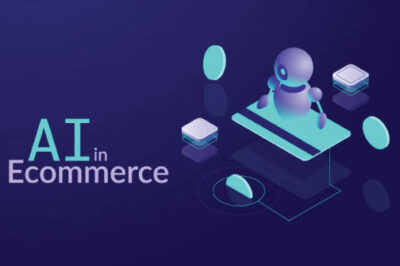
The Impact of AI and Machine Learning on E-commerce Personalization
AI (Artificial Intelligence) and machine learning have significantly transformed the landscape of e-commerce, particularly in the realm of personalization. Here are several impactful ways these technologies have influenced and enhanced e-commerce personalization: Customer Insights and Behavior Analysis Data Collection and Analysis: AI and machine learning algorithms efficiently gather and process vast amounts of data from…

Introduction to Cloud Computing
Cloud computing is a transformative technology that has revolutionized the way individuals and organizations store, access, and manage data, applications, and services. It involves the delivery of computing resources and services, including servers, storage, databases, networking, software, analytics, and more, over the internet (the “cloud”). This cloud-based approach to computing offers numerous benefits and has…

The Future of MOOCs: Trends and Innovations
Massive Open Online Courses (MOOCs) have been evolving since their inception and continue to shape the landscape of online education. Several trends and innovations are likely to influence the future of MOOCs: Personalization and Adaptive Learning Personalization and adaptive learning are two key trends in the field of education, and they have significant implications for…

Software-defined networks
Software-defined networking (SDN) is an innovative approach to network management that allows network administrators to control and manage network services through software applications rather than traditional hardware-based methods. SDN decouples the network’s control plane from its data plane, which means that network control functions are centralized and implemented as software applications, while the data plane,…
Evolution of Chat-GPT
The evolution of Chat-GPT represents a significant milestone in the development of natural language processing (NLP) technology and has had a profound impact on search technologies. Chat-GPT, which is based on the GPT-3.5 architecture, builds upon the advancements of its predecessors and incorporates various improvements, making it a powerful tool for human-like text generation, understanding,…

Metaverse, augmented reality (AR) and virtual reality
The Metaverse, Augmented Reality (AR), and Virtual Reality (VR) represent three interconnected yet distinct concepts in the realm of digital experiences and immersive technologies. These innovations are transforming the way we interact with digital content, each offering unique opportunities and challenges. 1. Metaverse The term “Metaverse” has gained significant attention in recent years, driven by…
Follow Us
Recent Posts
- SEO vs GEO vs AEO: What’s the Difference? (AI Search)
- Agentic AI in the Enterprise: From Copilots to Autonomous Coworkers (Agentic AI)
- Generative Engine Optimization (GEO): The Beginner’s Guide to Ranking in AI Search
- Agentic AI Explained: How Task-Running AI Agents Are Changing Daily Apps

- DeepSeek Under Fire: AI Ambitions Meet Global Roadblocks

Categories
- Artificial Intelligence 23
- Digital Marketing 25
- Hot News 94
- Technology 107
- Web Design 12
- Web Development 14
- Web Hosting 14
- Web Security 35